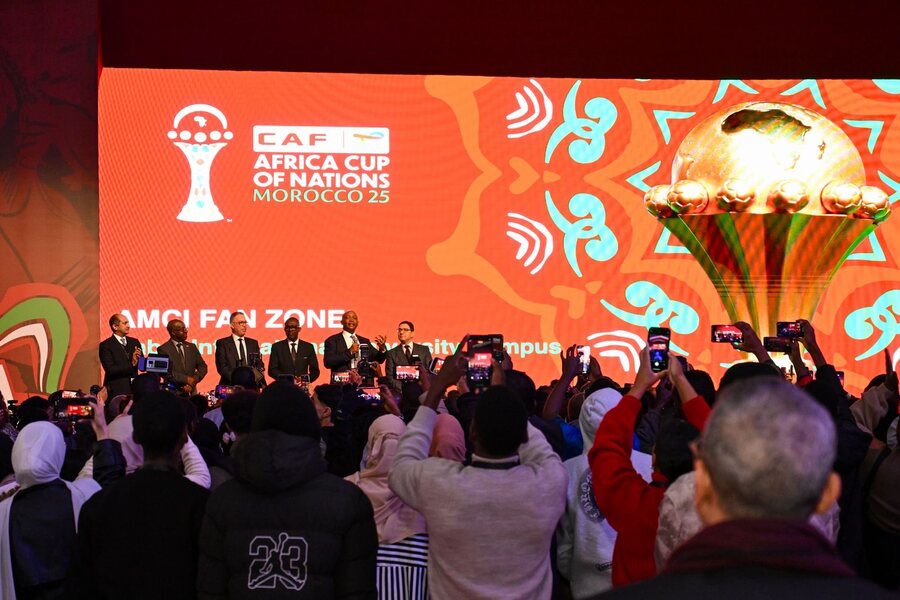
African football is on the brink of a landmark transformation after Confederation of African Football (CAF) president Patrice Motsepe confirmed sweeping changes to the continent’s international calendar, including a shift of the Africa Cup of Nations (AFCON) to a four-year cycle beginning in 2028 and the introduction of a new African Nations League.
Motsepe made the announcement on Saturday, just hours before the opening match of the 2025 AFCON in Morocco, signaling what CAF believes will be a new era for African football governance and competition structure.
Under the new roadmap, the biennial AFCON format, unchanged since 1968 apart from a brief adjustment between the 2012 and 2013 editions, will come to an end after the 2027 tournament, which will be jointly hosted by Kenya, Uganda and Tanzania. From 2028 onwards, the continent’s premier international tournament will be staged every four years.
AFCON 2025. Nine arenas set to define the continental showpiece
In parallel, CAF plans to roll out an African Nations League, expected to kick off in 2029 and run on an annual basis, providing regular competitive fixtures for national teams outside major tournaments.
“We have the most exciting new structure for African football,” Motsepe said to the media.
The announcement came as Morocco and Comoros prepared to open the 2025 tournament on Sunday at the Prince Moulay Abdellah Stadium in Rabat. As has become tradition, Motsepe addressed the media ahead of the curtain-raiser, touching on a range of strategic issues before unveiling a decision that is already sparking intense debate across the football landscape.
AFCON remains Africa’s flagship sporting spectacle, a tournament deeply woven into the continent’s football identity. Any alteration to its rhythm is therefore bound to divide opinion. Supporters of the move argue that a four-year cycle could enhance the tournament’s prestige and commercial value, while critics fear it may dilute the frequency and cultural significance of the competition.
The shift is also likely to be interpreted as a response to long-standing pressure from European clubs, which have repeatedly expressed frustration over releasing players mid-season. For the 2025 edition, clubs were allowed to keep their players until December 15, just six days before kickoff on December 21, underscoring the delicate balancing act between club and international football.
Scheduling, in particular, has haunted AFCON in recent years. The last three editions were all affected by calendar disruptions. The 2021 tournament was pushed into 2022 due to infrastructure delays in Cameroon, while similar challenges forced the 2023 edition to be played in early 2024.
CAF has previously experimented with moving AFCON from its traditional January-February slot to June and July, but the results were mixed. Only the 2019 tournament in Egypt successfully took place during the northern summer, and even then, extreme heat had a noticeable impact on match intensity and player welfare. In West Africa, heavy rainfall and flooding risks have further complicated any attempt to settle on a mid-year window.
Morocco 2025 itself was initially scheduled for June and July, but FIFA’s decision to expand the Club World Cup to 32 teams, and stage it during the same period, forced CAF’s hand. The tournament was subsequently rescheduled and will now run from December 21, 2025 to January 18, 2026.
With AFCON heading towards a four-year cycle and a Nations League on the horizon, CAF is betting that structural reform will bring greater stability, competitiveness and global respect to African football. Whether the changes strengthen the tournament’s legacy or provoke resistance from fans and stakeholders alike remains to be seen.
Related article: AFCON 2025: Schedule, results and standings of the Africa Cup of Nations