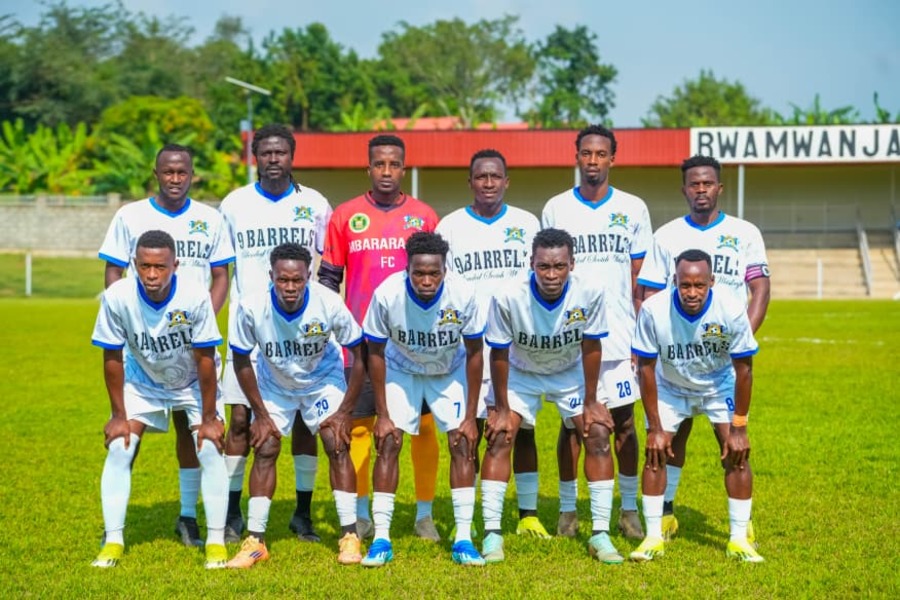
Ugandan football has grown accustomed to stories of clubs scraping by, but what played out in Kamwenge on Saturday, January 24, went beyond the familiar narrative of struggles.
Mbarara City’s scoreless draw against Lugazi was not merely a stubborn result earned against the odds; it was a public exposure of a club fighting to exist.
Before a ball was kicked, the warning signs were already glaring. Mbarara City arrived with a matchday squad that looked alarmingly incomplete. Eleven players. No substitutes. No safety net. In a top-flight league, that reality is not just uncomfortable, it is unacceptable.
As if the situation was not grim enough, the team’s tactical sheet revealed a scene closer to improvisation than preparation. Clinton Kamugisha, widely known for his work in attack, was redeployed between the posts. A forward turned goalkeeper, not by design or innovation, but by necessity. While versatility is often celebrated in football, this was something else entirely, a move born out of desperation.
Heroism or humiliation?
Kamugisha deserves every ounce of praise for what he did. Thrown into an unfamiliar role, he rose to the occasion, keeping a clean sheet and showing immense courage and commitment.
It takes a rare kind of character to accept such responsibility under those circumstances, and his performance will rightly be remembered as heroic.
Yet beyond the applause lies a more uncomfortable question: how did it come to this? When a Uganda Premier League club cannot provide a specialist goalkeeper or even a single player on the bench, the issue transcends individual bravery.
𝗙𝗨𝗟𝗟 𝗧𝗜𝗠𝗘
Spoils shared here at Rwamwanja Stadium.
𝗠𝗯𝗮𝗿𝗮𝗿𝗮 𝗖𝗶𝘁𝘆 𝟬-𝟬 𝗟𝘂𝗴𝗮𝘇𝗶 𝗙𝗖 pic.twitter.com/iTi53IIV0E
— Mbarara City FC Official (@TeamMbararaCity) January 24, 2026
It becomes an institutional failure that reflects poorly not just on the club, but on the league ecosystem that allows such situations to persist.
The price of broken promises
As is so often the case, the roots of the crisis appear to run deep. Reports of two months’ unpaid salaries paint a familiar but painful picture. Passion does not pay rent. Loyalty does not put food on the table. Players can only stretch commitment so far before survival takes precedence.
The contrast with Mbarara City’s recent past is stark. Not long ago, the club stood tall as the pride of Uganda’s Western region. Kakyeka Stadium was a feared destination, a fortress where visiting sides arrived hoping merely to limit the damage. Mbarara City were not participants; they were contenders.
Now, the Ankole Lions are wanderers, staging “home” fixtures in Kamwenge and struggling to assemble the bare minimum required for a competitive matchday. The decline has been swift, visible, and deeply troubling.
𝗠𝗮𝗻 𝗼𝗳 𝘁𝗵𝗲 𝗠𝗮𝘁𝗰𝗵
From being a striker to goal keeping, Our Number 10 stood tall and strong as he displayed a man of the match performance today. pic.twitter.com/tYitss40Pv
— Mbarara City FC Official (@TeamMbararaCity) January 24, 2026
A goalless draw earned under such conditions may feel miraculous, but miracles are not a sustainable business model.
Without urgent intervention from management, Mbarara City risks sliding from survival mode into complete collapse, a scenario that would be a loss not only to the club and its supporters, but to Ugandan football as a whole.