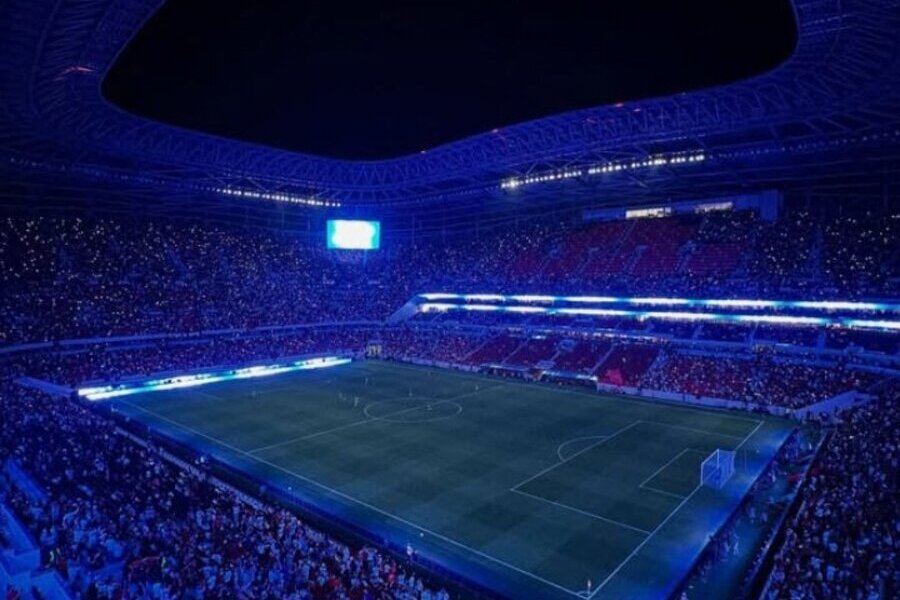
With the Africa Cup of Nations (AFCON) 2025 set to begin on December 21, 2025, Morocco is ready to showcase a footballing infrastructure that has been completely reimagined over the last two years.
While originally intended for the summer, the move to a winter schedule—running until January 18, 2026—has only heightened the anticipation for what is being called the most modern AFCON in history.
Across six cities, nine stadiums are ready to host the 24-team tournament.
The Flagship: Prince Moulay Abdellah Stadium (Rabat)
-
Capacity: 68,700
-
Key Matches: Opening Match (Morocco vs the Comoros), Semi-final, and the Final.
Rebuilt from the ground up on the site of the old national stadium, this venue is the tournament’s operational hub. The removal of the athletics track has created a high-intensity, football-specific atmosphere.
Its “palm leaf” façade isn’t just aesthetic; it’s an architectural nod to Moroccan heritage, housing the most advanced VAR and media facilities on the continent.
AFCON 2025. Osimhen and four other players who could win top-scoring race
The Northern Fortress: Grand Stade de Tanger (Ibn Batouta)
-
Capacity: 75,600
-
Key Matches: Group D (featuring Senegal) and a Semi-final.
Following a massive expansion, Tangier now boasts the largest stadium in the country. It has been upgraded to a “Cat 4” FIFA status, with a newly completed roof covering all 75,000 spectators. Located at the tip of the North, it will be the primary home for the defending champions’ group and a major knockout venue.
AFCON 2025. Meet five Nigeria Super Eagles debutants heading to Morocco
The “Rabat Mini-Hub”: Four Stadiums in One City
In an unprecedented move for AFCON, the capital city will utilize four distinct match venues to handle the density of the group stages:
-
Prince Moulay Abdellah (68,700): The main arena.
-
Moulay Hassan Stadium (22,000): A boutique, modernized venue hosting Algeria vs Sudan.
-
Rabat Olympic Stadium (21,000): A new dedicated athletics and football venue built adjacent to the main stadium.
-
Al Barid Stadium (18,000): The smallest but most modern of the quartet, set to host Uganda vs Tanzania.
AFCON 2025: Schedule, results and standings of the Africa Cup of Nations
The Soul of the Game: Stade Mohammed V (Casablanca)
-
Capacity: 45,000
-
Key Matches: Group A fixtures and the Third-place Playoff.
The legendary “Donor” has undergone a significant €40m renovation of its surrounding infrastructure and interior facilities.
While the newest stadiums offer futuristic glass and steel, Casablanca provides the historic atmosphere. It will host the high-stakes Group A clash between Mali and Zambia.
The Regional Powerhouses
-
Grand Stade de Marrakech (45,240): Its unique rectangular architecture and terracotta colors will host the “Group of Death” (Group F) heavyweight clash between the Ivory Coast and Cameroon.
-
Adrar Stadium (Agadir): Serving the sun-drenched coast, this 45,000-seater will be the base for Mo Salah’s Egypt in Group B.
Fez Stadium (45,000): Representing the spiritual heart of Morocco, this complex has been modernized to host Nigeria’s Super Eagles in Group C.
High-Speed Connections
A key component of the BBC’s guide for travelling fans is the Al Boraq high-speed rail. Connecting Tangier, Rabat, and Casablanca in under two hours, it allows supporters to potentially see two matches in different cities on the same day—a first for an African tournament.
As the Atlas Lions prepare to face the Comoros in just four days, the stage is not just set; it is arguably the most impressive stage the African game has ever seen.