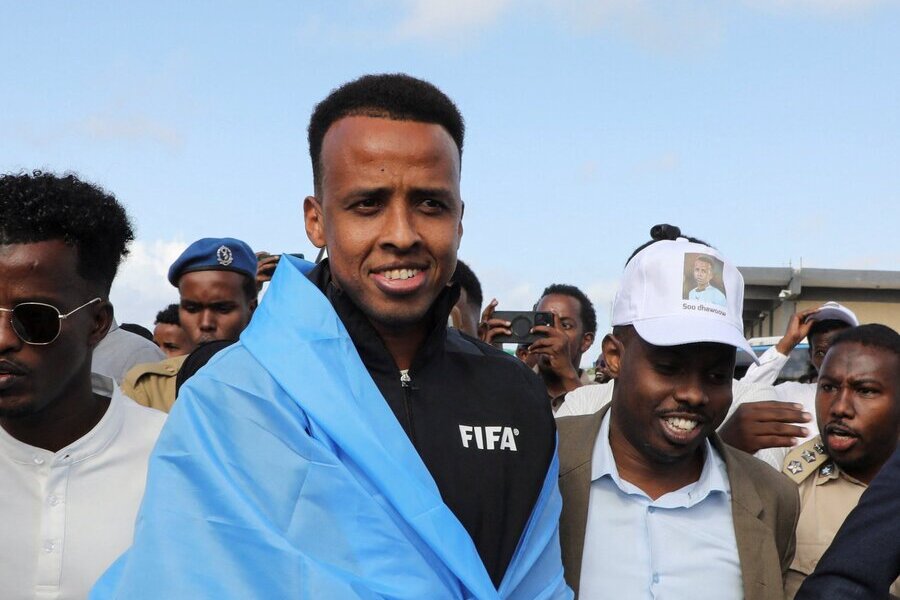
The African refereeing community has criticised FIFA following the treatment of Somali referee Omar Artan, who was denied entry to the United States despite being selected as one of the match officials for the 2026 FIFA World Cup, Footy-Africa can exclusively report.
Artan, widely regarded as one of Africa’s leading referees, travelled to Miami to join a group of 51 officials appointed for the tournament, which is being co-hosted by the United States, Mexico and Canada.
However, the Somali official says he was subjected to an 11-hour immigration interview before being refused entry and placed on a return flight.
The decision has sparked anger among African football officials, with some accusing FIFA of failing to protect one of the continent’s most accomplished referees.
Somali referee Omar Artan speaks out after denied entry to the US for World Cup
An African referee assessor, who spoke to Footy-Africa on condition of anonymity, described the incident as a major setback for African officiating.
“I am deeply disappointed. It takes Africa 10 to 15 years to produce a referee like Omar. That is more than a decade of preparation for a moment like this,” he exclusiveyl told Footy-Africa.
“I remember a Somali instructor attending a FIFA course in Nigeria last year. He was immensely proud that Somalia was finally sending a young referee to the World Cup. This is not only painful for Omar, but also for the coaches and mentors who helped him reach this stage.”
The assessor argued that the situation sends a discouraging message to aspiring African referees:
“Omar was voted Africa’s best referee in 2025. If the continent’s top official cannot attend the World Cup, what message does that send to others? The World Cup is the ultimate dream for referees just as it is for players.”
Rising profile
Artan’s reputation has grown significantly in recent years through appointments at major CAF competitions, including the Africa Cup of Nations and continental club tournaments.
He was also selected for the FIFA Under-20 World Cup in Chile, where he officiated three matches, including the third-place play-off.
Later that year, he took charge of two group-stage fixtures at the Africa Cup of Nations, having also officiated at the previous edition of the tournament in 2024.
In March 2026, his inclusion on FIFA’s list of World Cup referees appeared to mark the pinnacle of a rapidly rising career.
Instead, the 34-year-old now faces the prospect of missing what many believe would have been a historic milestone, becoming the first Somali referee to officiate at a FIFA World Cup.
Yan Diomande and four other most valuable African players at 2026 FIFA World Cup
Questions over FIFA’s response
The controversy has also reignited debate over FIFA’s ability to intervene in visa and immigration matters involving tournament participants.
FIFA said there was little it could do because entry decisions ultimately fall under the jurisdiction of the host country’s immigration authorities.
However, some African officials have questioned that position, citing FIFA’s decision to remove Indonesia as host of the 2023 FIFA Under-20 World Cup after political opposition to the participation of Israel.
The anonymous assessor believes the situations expose an inconsistency in FIFA’s approach:
“Personally, I believe FIFA is displaying a double standard. In 2023, Indonesia lost hosting rights because of visa-related issues involving Israel. Now FIFA says it cannot interfere with a host country’s laws and regulations. It is unfortunate that an African referee appears to be paying the price.”
He also criticised FIFA president Gianni Infantino:
“Infantino repeatedly assured the football world there would be no visa or entry problems for participants travelling to the United States. That makes this situation even more difficult to understand.”
2026 World Cup. Mexico vs South Africa: preview, starting XI, prediction, betting, facts
Former FIFA referee reacts
Retired FIFA referee Jelil Adeniran Ogunmuyiwa described the situation as “shocking” and said he initially expected it to be resolved quickly.
“When I first saw the reports, I assumed the issue would be sorted out. Then FIFA’s communications department indicated there was nothing they could do, and that came as a huge surprise,” he told Footy-Africa.
“This is a young referee who finally reached the stage every official dreams of. Now he must wait another four years for a similar opportunity, and there is no guarantee circumstances will be the same.”
Ogunmuyiwa believes FIFA should have worked more closely with US authorities before publishing the list of selected officials:
“Once the World Cup referee appointments are announced, FIFA should immediately engage with immigration authorities to ensure there are no entry problems. Allowing him to travel all the way to the United States only to be turned back feels like a slap in the face for African football.”
New rules set for World Cup debut
Meanwhile, the 2026 World Cup will also be the first major tournament to implement a significant package of law changes approved by the International Football Association Board (IFAB).
Among the measures aimed at reducing time-wasting are new countdown procedures for throw-ins and goal kicks.
Under the changes:
- Referees will apply a visible five-second countdown.
- Teams that fail to take a throw-in within the allotted time will concede possession.
- Excessive delays over goal kicks could result in a corner kick being awarded to the opposition.
Ogunmuyiwa stressed that the changes should not come as a surprise to players, coaches or match officials:
“These rules are new to the public, but not to those involved in football. Referees have been training for these changes since last year through seminars and specialised camps.”
The first-ever #FIFAWorldCup to feature 48 teams. 🌎
Tomorrow’s the day. 1️⃣ day to go! ⏳ pic.twitter.com/JWHrQlfrMd
— FIFA World Cup (@FIFAWorldCup) June 10, 2026
He added that IFAB formally approved the amendments on 1 March, allowing sufficient time for preparations ahead of the World Cup:
“Everyone has known about these changes since March. Teams, coaches and referees have all been informed and have been working towards implementation. No one should be caught off guard.”
Dream delayed
For Artan, the disappointment is particularly acute.
The Somali official appeared set to become the first referee from his country to officiate at a FIFA World Cup, a landmark achievement both personally and nationally.
Instead, after what should have been the defining moment of his career, he finds himself returning to Mogadishu while the tournament proceeds without him.
For many within African football, the incident raises uncomfortable questions about access, fairness and whether FIFA did enough to ensure one of the continent’s brightest refereeing talents could take his place on the sport’s biggest stage.