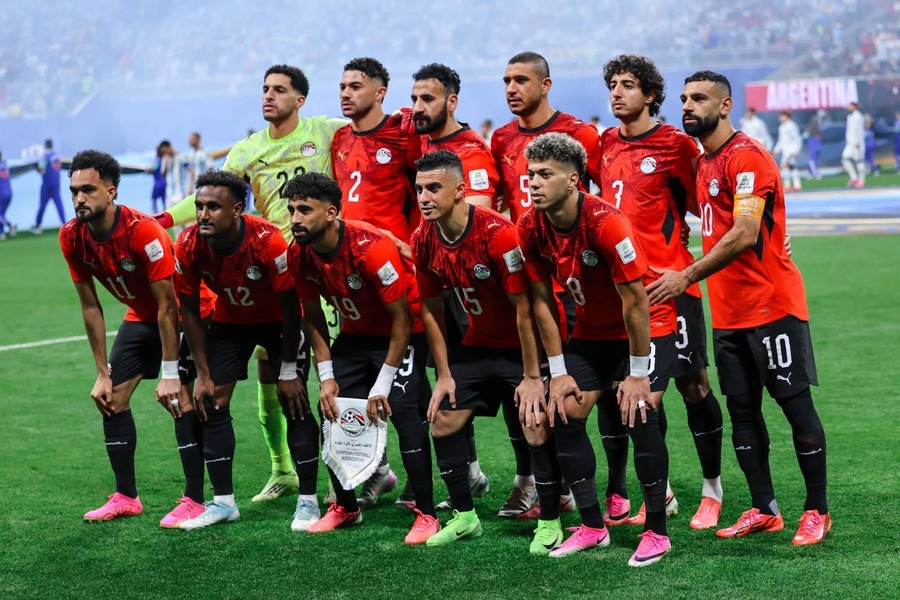
The 2026 FIFA World Cup was another landmark tournament for African football.
A record nine of the continent’s 10 representatives progressed to the knockout stage, with only Europe sending more teams into the Round of 32. It was further evidence that the gap between African teams and the traditional powers of Europe and South America is continuing to close.
Yet the tournament also showed how much work remains. While Morocco reached the quarter-finals and Egypt advanced to the last 16, the continent ultimately fell short of producing its first world champion.
The talent is no longer in doubt. What Africa now needs is the right structure, planning and decision-making to turn potential into a World Cup triumph.
Here are five key areas African football must address before that breakthrough can become a reality.
1. Good governance: Put the right people in charge
Five African superstars who failed to meet expectations at the 2026 World Cup
Everything starts with leadership. African football cannot achieve its full potential without competent administrators, long-term planning, and accountability. Corruption, political interference, and poor decision-making continue to undermine many football federations across West, East and Southern Africa. By comparison, North African countries have generally built more stable football institutions, which has contributed to their greater success on the international stage.
Nigeria is a good example. Despite possessing one of the most talented groups of players in world football, the Super Eagles failed to qualify for the 2022 and 2026 FIFA World Cup. Many of those failures were linked to poor administrative decisions, inadequate planning and inconsistent preparation during the qualifying campaign. Talent alone is never enough when leadership fails.
African football federations need leaders with a clear vision, football expertise and the courage to make decisions based on merit rather than politics. Good governance is the foundation upon which every successful football nation is built.
2. Invest in infrastructure and youth development
Africa’s standout stars at the 2026 World Cup: Five players who lit up the global stage
The long-term success of any football nation depends on investment in infrastructure and youth development.
Many African football federations still lack modern training centres, quality pitches, sports science facilities and structured youth academies. Morocco has shown what sustained investment can achieve, while South Africa also possesses relatively stronger football infrastructure than many countries on the continent.
Investment should not stop at building stadiums. Federations must create football ecosystems that develop players from grassroots level through the youth ranks and into the senior national team. Consistent success at U-17 and U-20 competitions should become the foundation for senior success.
African football associations must also reduce their dependence on FIFA Goal Project funding alone and make football development a national priority through partnerships with governments and the private sector.
3. Trust and develop local coaches
Morocco dominate African Team of the World Cup as Hakimi headlines best XI
One of African football’s biggest weaknesses is the lack of trust in local coaches.
Many federations continue to believe that foreign coaches are the quickest solution to poor results, yet history tells a different story. No foreign coach has ever won the FIFA World Cup. Success comes from building long-term coaching structures rather than constantly changing managers.
The 2026 FIFA World Cup exposed this problem. Senegal arrived at the tournament with one of Africa’s strongest squads, yet head coach Pape Thiaw reportedly had no proper contract and was said to have considered boycotting training over his employment situation. Tunisia dismissed their coach during the tournament and brought in Hervé Renard, but the change produced no miracle as the team exited in disappointing fashion. Ghana also changed course shortly before the World Cup, replacing Otto Addo with Carlos Queiroz, who left immediately after elimination. Algeria entered the tournament under a Swiss coach whose future was already uncertain, while South Africa faced similar uncertainty around Hugo Broos. Nigeria, meanwhile, used three different coaches during its World Cup qualifying campaign—two foreign coaches and one local coach.
Constant coaching changes create instability, disrupt tactical continuity and prevent teams from building a clear identity.
African federations should invest in educating local coaches, provide competitive contracts and give them the time and stability needed to build successful teams.
4. Improve game management and develop winning mentality
Five African stars who could earn major transfers after 2026 FIFA World Cup
African teams have the talent to compete with the world’s best. Too often, however, they lose matches because of poor game management rather than inferior ability.
The 2026 FIFA World Cup offered several painful examples. Senegal surrendered a 2-0 lead with five minutes remaining against Belgium and eventually lost 3-2 in the Round of 32. South Africa were eliminated by a 94th-minute goal against Canada. DR Congo lost control of their match against England after leading late in the second half and were knocked out. Egypt also surrendered a two-goal advantage against Argentina in the closing stages.
These defeats were not simply about talent. They reflected problems with tactical discipline, substitutions, concentration, leadership and decision-making under pressure.
Winning the World Cup requires teams to know how to manage difficult moments, protect leads and remain mentally strong throughout 90 minutes. These qualities are developed through experience, coaching and a winning culture.
5. Strategically harness Africa’s diaspora talent
Morocco boss Mohamed Ouahbi stays defiant after World Cup, eyes future success
Africa possesses one of the richest football talent pools in the world, both on the continent and across the diaspora.
Many players born and raised in Europe are eligible to represent African nations, and several have significantly strengthened their national teams. Morocco’s historic World Cup success was built partly on the effective integration of diaspora players, with many members of the squad born abroad but fully committed to representing their heritage.
At the same time, many European countries continue to benefit from African migration, as talented players choose to represent the nations where they were born instead of their countries of origin.
Nigeria’s failure to secure Bukayo Saka illustrates this challenge. By the time he became one of England’s brightest young stars, his football identity and emotional connection to England had already been established.
African football associations must begin engaging eligible players much earlier. Rather than waiting until players become global stars, federations should recruit them into U-17 and U-20 national teams, build lasting relationships with their families and make them feel part of the country’s football project from an early age.
A successful diaspora strategy is not about convincing established stars to switch allegiance at the last minute. It is about building genuine connections long before those difficult decisions are made.
Africa has already shown that it can compete with the world’s best. The next challenge is proving it can consistently beat them. If the continent can address these five areas, winning a FIFA World Cup may no longer be a distant dream but an achievable target.