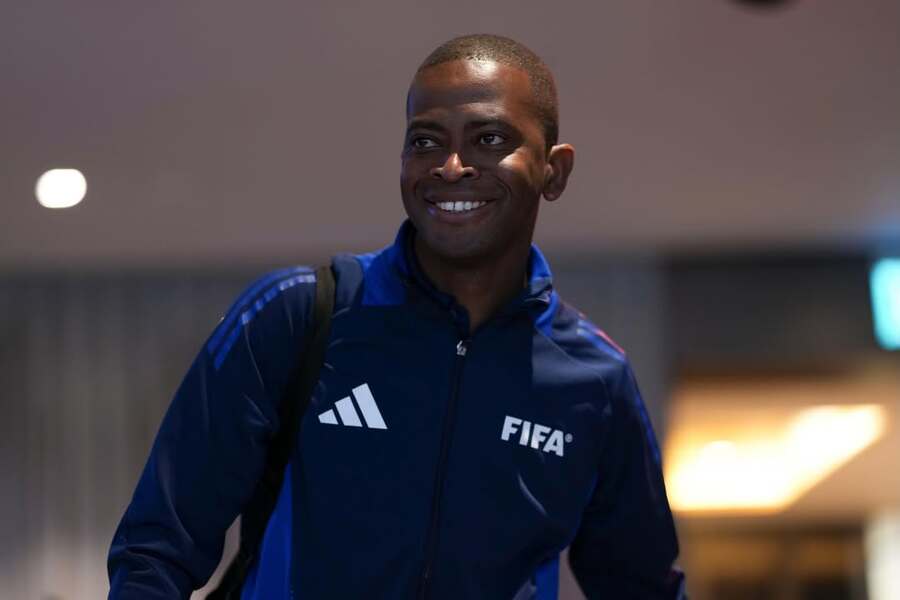
FIFA High Performance Specialist Faisal Abdul Chibsah, in an exclusive interview with Footy-Africa, has stated that the qualification of nations such as Curacao and Cape Verde for the 2026 FIFA World Cup validates FIFA’s decision to expand the tournament to 48 teams.
Speaking exclusively to Footy-Africa, Chibsah said the expanded format has opened the door for more countries, players and supporters to experience football’s biggest event while helping to grow the game globally.
Chibsah, who will be in North America for the tournament, backed FIFA’s decision despite concerns raised by some critics about the increased number of participating teams. The 2026 World Cup, which kicks off on June 11 in the United States, Canada and Mexico, will be the first edition to feature 48 teams and 104 matches.
“Listen, if you ask me, it was a crazy idea, but you can also understand why FIFA decided to increase it to 48 teams,” Chibsah told Footy-Africa. “One of the reasons is to give many teams the opportunity to experience a World Cup. Not many countries have the opportunity to do so, and it only comes around every four years. If you look at a top player, if you’re lucky, you can probably play two or three World Cups and then your career is over.”
This is the greatest show in the world. This is the #FIFAWorldCup. The wait is over. pic.twitter.com/VZmWo8qEAL
— FIFA World Cup (@FIFAWorldCup) June 6, 2026
According to Chibsah, the presence of new nations at the tournament highlights the success of the expanded format.
“As we’ve seen this year, Curacao will be going for the first time and Cape Verde will be going for the first time. For me, it’s a wonderful thing. The joy it brings to the country, but also the opportunity it brings to these players to experience such a global event.”
“Football is for everyone. It’s important that wherever football goes, it reaches the masses, helps countries grow the game and gives opportunities to young people. For me, that community aspect is very important.”
Chibsah also defended FIFA’s decision to award hosting rights jointly to the United States, Canada and Mexico:
“Not many countries would be in a position to host 48 teams on their own. If you look at the infrastructure and facilities required, it is massive. Splitting it between multiple countries makes sense because it gives more countries the opportunity to host while reducing the burden on a single nation.”
While praising the format, Chibsah admitted that weather conditions could be one of the tournament’s biggest challenges:
“The difficulty was always going to be the weather. That’s something that’s out of anybody’s hands. We just have to deal with it and find the best way to prepare and compete.”
No one has won more #FIFAWorldCup titles than O Rei 🏆🏆🏆
Just 3️⃣ days to go! ⏳ pic.twitter.com/Gl6O8z4Ojm
— FIFA World Cup (@FIFAWorldCup) June 8, 2026
Despite those concerns, the FIFA specialist expects the competition to deliver one of the most exciting World Cups in history:
“I think it will be an exciting one. If you look at where the game is heading now, we saw it in the last edition, there are no smaller teams anymore. Everybody is ready to compete. I can see this being even bigger than before. I’m excited about it.”
The 2026 World Cup will be the largest tournament in FIFA history, with nations from every confederation hoping to make their mark on football’s biggest stage.